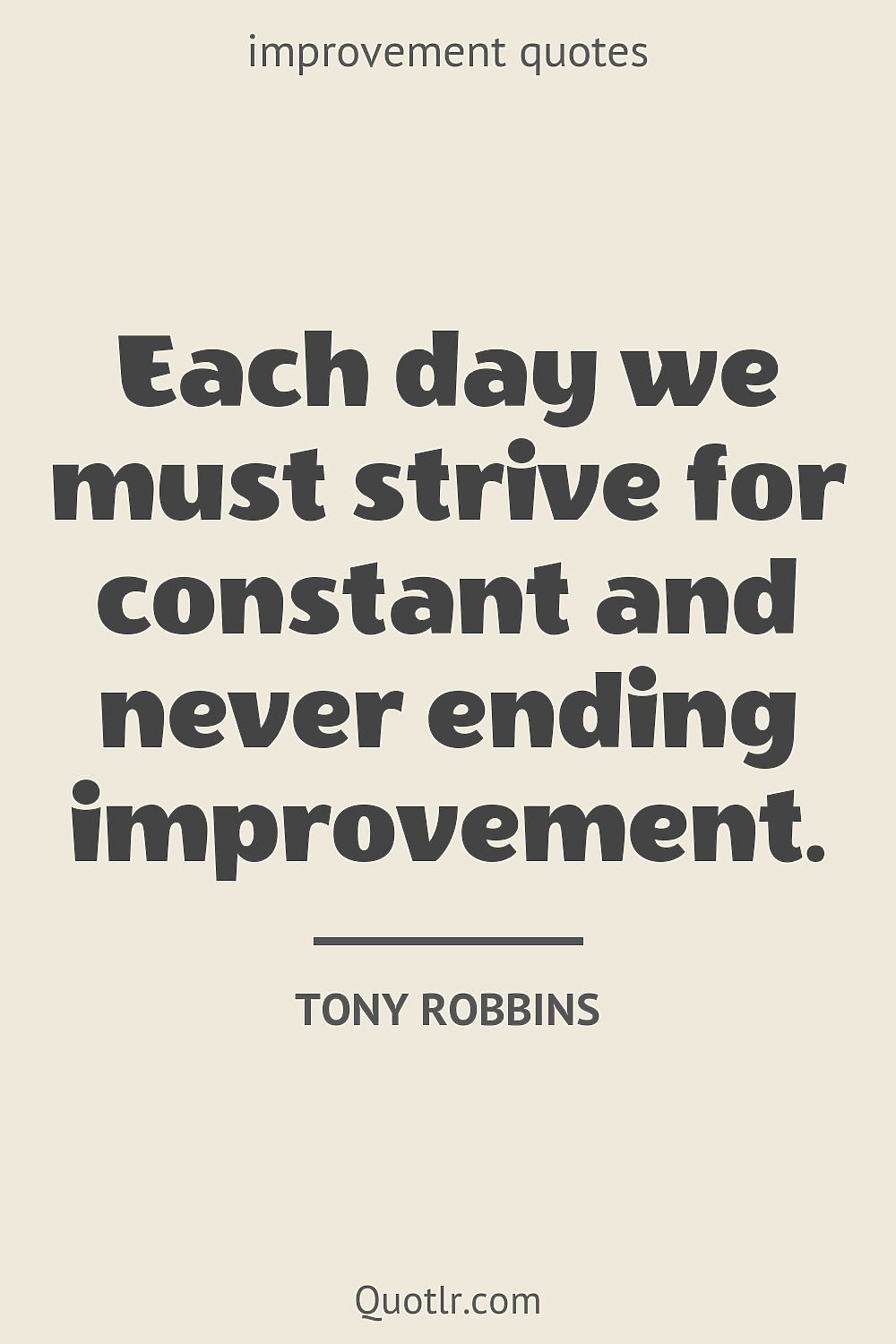
For the bigger picture and full context, make sure you read our main guide on Short Self Improvement Quotes To Inspire Your Best Self.
Feeling stuck? The desire to improve is a powerful starting point, and sometimes all it takes is the right spark. That's where the wisdom packed into "strive to be better quotes" can truly make a difference, offering a concise nudge in the direction of progress.
At a glance:
- Discover how specific "strive to be better quotes" can unlock new perspectives on personal growth.
- Learn how to practically apply inspiring quotes to your daily life through intention setting and habit building.
- Understand common pitfalls in using motivational quotes and how to avoid them for sustained improvement.
- Find quick answers to common questions about motivation and self-improvement strategies.
Why "Strive to Be Better Quotes" Resonate
"Strive to be better quotes" bypass lengthy explanations and cut straight to the core of motivation. They offer concentrated doses of inspiration that can shift your mindset and spur you into action. They act as mental shortcuts, instantly reminding you of your potential and the importance of continual growth.
For example, consider Ernest Hemingway's quote: "There is nothing noble in being superior to your fellow man; true nobility is being superior to your former self.” It reframes competition, placing the focus on personal progress rather than external validation.
Choosing the Right Quotes for Your Journey
Not all quotes resonate equally with everyone. The key is to select quotes that align with your current challenges and aspirations.
Here's a step-by-step approach:
- Identify Your Areas for Growth: Be specific. Is it productivity, relationships, or mindset?
- Seek Relevant Quotes: Search specifically for quotes addressing those areas. For example, type "quotes on improving productivity" or "quotes on positive relationships."
- Evaluate and Select: Choose quotes that evoke a strong emotional response within you. Do they make you feel empowered, challenged, or hopeful?
- Personalize the Meaning: Reflect on why the quote resonates with you. What specific actions does it inspire you to take?
From Inspiration to Action: Applying Quotes Effectively
Inspiration is fleeting if it doesn't translate into action. Here’s how to make "strive to be better quotes" a catalyst for real change:
- Daily Affirmations: Start your day by reciting a chosen quote. This sets a positive intention for the day.
- Example: If your quote is "Improvement begins with I," consciously look for one small way to improve a task, relationship, or habit each day.
- Visual Reminders: Write the quote on sticky notes and place them where you'll see them frequently – your mirror, workspace, or refrigerator.
- Journaling Prompts: Use the quote as a prompt for journaling. Explore your thoughts and feelings related to the quote, and identify concrete steps you can take to embody its message.
- Actionable Goals: Translate the quote into a specific, measurable, achievable, relevant, and time-bound (SMART) goal.
- Example: If your quote is "Become addicted to constant and never-ending self-improvement,” set a goal to read one self-improvement article or listen to one relevant podcast each week.
Common Pitfalls and How to Avoid Them
While "strive to be better quotes" are powerful, they can fall flat if used incorrectly. Here are common pitfalls:
- Over-Reliance: Relying solely on quotes without taking action leads to motivational burnout.
- Solution: Balance inspiration with consistent effort. Remember, quotes are fuel, not the entire engine.
- Vague Application: Interpreting quotes too broadly makes it difficult to implement them concretely.
- Solution: Break down the quote into specific behaviors or actions. Ask yourself, "What does this quote actually mean in my daily life?"
- Ignoring Personal Values: Choosing quotes that don't align with your values leads to inauthenticity.
- Solution: Select quotes that resonate deeply with your core beliefs and aspirations.
Cultivating a Growth Mindset through Quotes
A growth mindset, the belief that abilities can be developed through dedication and hard work, is essential for self-improvement. Certain quotes explicitly foster this mindset.
Compare these quotes:
- Fixed Mindset: "You either have it or you don't."
- Growth Mindset: "The mind is just like a muscle – the more you exercise it, the stronger it gets and the more it can expand.” – Idowu Koyenikan
The second quote emphasizes the malleability of the mind, encouraging continuous learning and development.
To cultivate a growth mindset:
- Identify Fixed Mindset Triggers: Recognize situations where you tend to think in fixed terms (e.g., "I'm just not good at this").
- Challenge Those Thoughts: Counter fixed mindset thoughts with growth-oriented affirmations. (e.g., "I may not be good at this yet, but I can improve with practice").
- Embrace Challenges: View challenges as opportunities to learn and grow, rather than threats to your ego.
Integrating Quotes into Daily Habits
Turn inspirational quotes into lasting habits through consistent reinforcement.
Here's a simple habit-building framework:
- Cue: Identify a specific trigger that will remind you of the quote. (e.g., the first sip of your morning coffee).
- Routine: Recite the quote and reflect on its meaning for 30 seconds.
- Reward: Acknowledge yourself for completing the routine. (e.g., "Good job! You're taking steps to improve.").
Consistency is key. Even small daily actions, guided by "strive to be better quotes", compound over time, leading to significant personal growth.
Strive to Be Better Quotes: Examples for Specific Areas
Here are quotes categorized by area of focus:
Resilience
- "Fall seven times, stand up eight." – Japanese Proverb
- Application: When facing setbacks, remind yourself that resilience is about getting back up, not avoiding falls.
- "When you come to the end of your rope, tie a knot and hang on." – Franklin D. Roosevelt
- Application: Remember your inner strength during tough times; find a way to persevere.
Self-Love - “To love oneself is the beginning of a lifelong romance.” – Oscar Wilde
- Application: Make self-care a priority. Treat yourself with the same compassion and kindness you would offer a friend.
- "You, yourself, as much as anybody in the entire universe, deserve your love and affection." – Buddha
- Application: Practice self-compassion and positive self-talk. Acknowledge your strengths and accept your imperfections.
Goal Setting - “Setting goals is the first step in turning the invisible into the visible.” – Tony Robbins
- Application: Write down your goals, break them into smaller steps, and create a timeline for achievement.
- "A goal without a plan is just a wish." – Antoine de Saint-Exupéry
- Application: Develop a detailed plan of action for each goal. Identify the resources, skills, and support you need to succeed.
Discipline - “Discipline is the bridge between goals and accomplishment.” – Jim Rohn
- Application: Establish routines and stick to them, even when you don't feel like it.
- "Motivation gets you going, but discipline keeps you growing." – John C. Maxwell
- Application: Recognize that motivation is temporary. Cultivate discipline as a long-term strategy for success.
Quick Answers to Common Questions
Q: How do I find quotes that truly resonate with me?
A: Explore different sources (books, websites, podcasts). Pay attention to quotes that evoke a strong emotional response. Consider what aspects of your life you're trying to improve and seek quotes specific to those areas. Don't be afraid to experiment and see what sticks.
Q: What if a quote initially motivates me, but then loses its impact?
A: It's normal for quotes to lose impact over time. When this happens, try reframing the quote in your own words or finding a new quote that addresses your evolving needs. Variation is key.
Q: Can quotes alone guarantee self-improvement?
A: No. Quotes are a powerful tool, but they are not a substitute for action. Self-improvement requires consistent effort, discipline, and a willingness to learn and grow. Use quotes to fuel your motivation and guide your actions, but don't rely on them as a magic bullet.
Q: How do I avoid feeling overwhelmed by the pressure to constantly improve?
A: Self-improvement is a journey, not a destination. Focus on making small, incremental improvements over time. Celebrate your progress and be kind to yourself when you stumble. Remember, self-compassion is just as important as self-discipline.
Your Actionable Takeaway: A 30-Day Challenge
Ready to put "strive to be better quotes" into practice? Commit to this 30-day challenge:
- Choose one area for improvement. (e.g., productivity, mindfulness, communication).
- Select a quote that resonates with that area.
- Each day, for 30 days, do the following:
- Recite the quote aloud in the morning.
- Write the quote in your journal and reflect on its meaning.
- Identify one small action you can take that day to embody the quote's message.
- Track your progress and celebrate your wins!
Self-improvement isn't about perfection; it’s about progress. Embrace the journey, learn from your mistakes, and celebrate your successes. Remember, the power to become your best self lies within you. You can read inspiring self-improvement quotes.